How to Find Industrial Buyers in India
Key Takeaways
- Industrial buyers in India are concentrated in a handful of specific channels — GeM, OEM vendor portals, B2B directories, and export councils — not scattered randomly across the internet
- GeM (Government e-Marketplace) is free to join and gives direct access to government and PSU procurement without an existing relationship
- IndiaMart and TradeIndia list buyer enquiries by product category — most manufacturers set up a profile once and never optimise it for actual buyer search terms
- Export Promotion Councils maintain buyer-seller meet calendars and overseas buyer databases specific to your product category
- Large OEMs run closed vendor-development programs actively looking for MSME suppliers in the ₹5–50 Cr range
- Finding buyers is only half the system — converting their enquiries into orders is where most of the revenue is actually lost
Why "Finding Buyers" Is the Wrong First Question
Every manufacturer I meet asks some version of the same question: where are the buyers? The honest answer is that industrial buyers in India are not hiding. They are concentrated in a small number of well-known channels. The real gap is that most manufacturers never systematically show up in those channels — they rely on word of mouth and hope.
Here is the list that actually matters, in the order I recommend building it out.
1. GeM — Government e-Marketplace
If your factory is not registered on GeM (gem.gov.in), you are invisible to one of the largest buyer pools in the country. Government departments, PSUs, defence establishments, and municipal bodies procure through GeM — fasteners, packaging, safety equipment, electrical components, fabricated parts, and hundreds of other categories. Registration is free and the procurement process is transparent and rule-based, not relationship-based. For several manufacturers I have worked with, GeM has become a reliable 15–20% addition to annual revenue within the first year once the profile and catalogue are set up correctly.
2. B2B Directories — IndiaMart, TradeIndia, ExportersIndia
Most manufacturers already have a listing on IndiaMart or TradeIndia. Very few have optimised it. Buyers search these platforms using specific terms — material grade, tolerance, HSN code, MOQ — not generic descriptions like "quality products." A profile that mirrors the exact language a procurement manager types into the search bar gets found. A generic one does not. This is a content problem, not a platform problem.
3. Export Promotion Councils (EPCs)
If you make anything with export potential, your sector almost certainly has an Export Promotion Council — EEPC for engineering goods, CAPEXIL, FIEO, and dozens of product-specific councils. EPCs run buyer-seller meets, maintain verified overseas buyer databases, and organise trade delegations. Membership cost is small relative to the buyer access it unlocks, especially if you have never exported before and do not know where to start.
4. OEM Vendor Development Programs
Large OEMs — auto majors, capital goods manufacturers, infrastructure companies — run formal vendor-development programs specifically to onboard MSME suppliers, partly because government and industry policy pushes larger companies to increase MSME sourcing. Most small manufacturers assume they are too small to qualify and never apply. In reality these programs actively look for suppliers in the ₹5–50 Cr range with specific process capabilities. Onboarding takes three to six months, but the revenue that follows is stable for years.
5. Industrial Clusters and Trade Fairs
India has thousands of industrial clusters, and within yours there are buyers you have never spoken to — along with complementary manufacturers who can refer work they cannot handle themselves. Sector-specific trade fairs (IMTEX, Vibrant Gujarat, MSME expos) put buyer-side procurement teams in one room for a few days. Most founders collect business cards and do nothing with them afterward. The ones who convert this into revenue treat every fair as a structured prospecting exercise, with follow-up calls scheduled before they leave the venue.
Finding Buyers Is Not the Same as Closing Them
Here is the part most guides skip: putting your factory in front of more buyers does not fix revenue if your quotation-to-order conversion is already broken. I have worked with manufacturers receiving 20–30 enquiries a month and converting fewer than 5%. Adding GeM, EPC membership, and a better directory profile on top of a broken follow-up process just produces more enquiries that go nowhere. Before you invest time finding new buyer channels, it is worth knowing your current conversion rate — the Free MSME Revenue Bottleneck Audit identifies exactly where enquiries are being lost.
Next Steps
Buyers are not the scarce resource for most Indian manufacturers — a system for reaching and converting them is. If you want a direct conversation about which channel fits your product and where your current pipeline is leaking, WhatsApp +91 70879 43430 or visit the Contact page. Bring your last 12 months of enquiry data and we will find the gap together.
For more information, contact Rajnish Sharma — rajnish@rajnishrds.com | +91 70879 43430
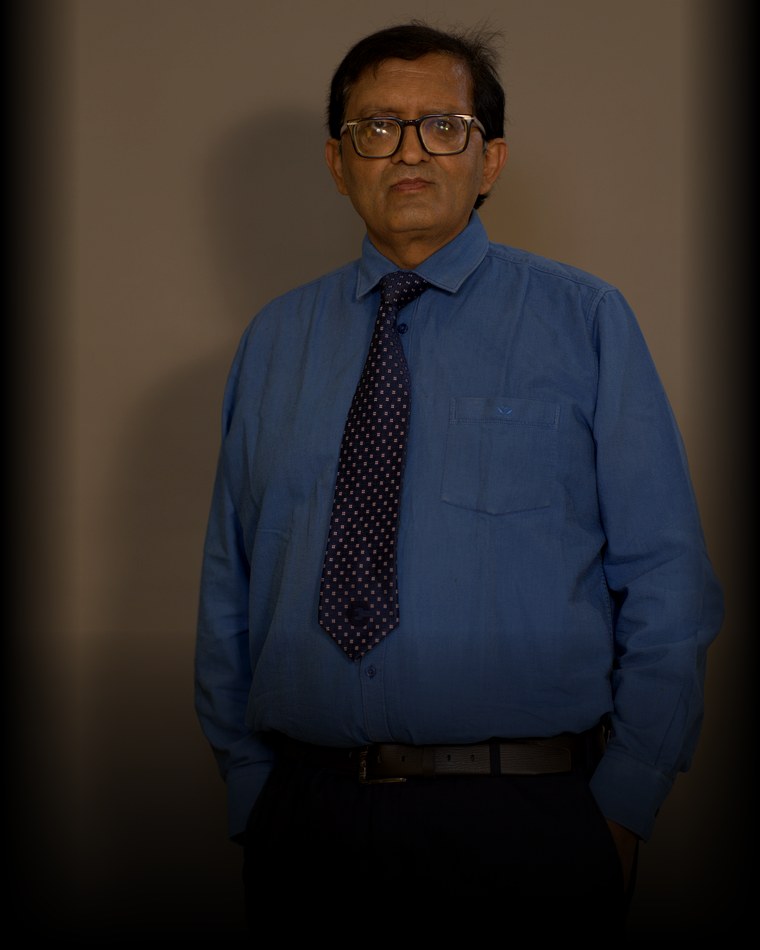
Rajnish Sharma is an IIT Delhi M.Tech engineer and MSME turnaround consultant with 35 years of Indian manufacturing experience. He is the founder of RDS Scalar Revolution — a drug-free self-health education platform — and a practitioner of Vedic astrology and CosmoAstro methodology. Based in Hoshiarpur, Punjab.
Find Your Revenue Bottleneck — Free 30-Min Audit
30-minute diagnostic. Rajnish Sharma (RDS) identifies your primary bottleneck. You get a specific action plan. No deck. No pitch.
IIT Delhi M.Tech · 35 years Indian manufacturing experience
