How to Get New Clients for Your Manufacturing Unit in India
Key Takeaways
- Most Indian manufacturing units are sitting within reach of 10–20 untapped clients — the problem is not scarcity of buyers, it is an invisible bottleneck in how they sell
- Your existing customer base is your fastest route to new revenue — referrals from satisfied buyers convert 3–5x faster than cold outreach in B2B manufacturing
- GeM (Government e-Marketplace) and MSME vendor registration with larger OEMs are two underused channels that many Indian manufacturers completely ignore
- Digital presence is no longer optional — even B2B buyers in Tier 2 and Tier 3 cities now search online before calling a vendor
- Fixing your sales bottleneck matters more than adding new lead sources — more leads into a broken system just creates more waste
- The Scalar Revenue Unlock System identifies the single constraint blocking your revenue growth and removes it within 90 days
Where Are Your Next 10 Clients Hiding?
They are closer than you think. In my experience working with manufacturers across Punjab, Haryana, Gujarat, and Maharashtra, the next 10 clients are almost always reachable within 90 days. The problem is that most founders are looking in the wrong direction.
1. Inside your existing customer base
Your current buyers already trust you. Ask them directly: who else in their network buys what you make? Referral-based B2B leads in manufacturing close at conversion rates 3–5 times higher than cold outreach. (Source: LinkedIn B2B Institute, 2023). Most founders never ask. One auto component manufacturer in Ludhiana I worked with added ₹1.8 Cr in new business within 60 days simply by formalising a referral request process with his top 6 customers. No advertising. No fancy CRM.
2. GeM — Government e-Marketplace
If you are not registered on GeM (gem.gov.in), you are leaving government procurement money on the table. As of 2024, cumulative GMV on GeM crossed ₹4 lakh crore. (Source: GeM Annual Report 2023–24). Government departments, PSUs, and defence establishments are actively buying manufactured goods — fasteners, safety equipment, packaging, electrical components, fabricated parts. Registration is free. The procurement cycle is transparent. For many of the manufacturers I consult, GeM has become a reliable 15–20% addition to annual revenue within the first year of activation.
3. Tier 1 OEM vendor development programs
Large OEMs — Maruti, L&T, Tata, Mahindra, BHEL — run formal vendor development programs specifically to onboard MSMEs. These programs exist because the government and industry bodies push large companies to increase MSME sourcing. (Source: Ministry of MSME, Public Procurement Policy for MSEs, 2012 amended 2018). Most small manufacturers do not apply because they assume they are too small or will not qualify. In reality, these programs are actively looking for suppliers in the ₹5–50 Cr range with specific process capabilities. I have helped three clients get onboarded as Tier 2 suppliers to large OEMs in the past two years. The onboarding takes 3–6 months but the revenue is sticky for years.
4. Industrial clusters and trade associations
India has over 6,000 industrial clusters. (Source: SIDBI MSME Pulse Report). Within your cluster, there are buyers you have never spoken to. There are also complementary manufacturers who serve the same end-customers and can refer work they cannot handle. The CII, FICCI, and NSIC all run matchmaking events. Most founders attend these events, collect business cards, and do nothing with them. The ones who grow treat every event as a structured prospecting exercise — with follow-up calls scheduled before they leave the venue.
5. Your digital presence — or the absence of it
B2B buyers in India are searching online before they call. This is no longer limited to metro cities. A procurement manager in Rajkot, Coimbatore, or Jalandhar now Googles your company name before agreeing to visit your plant. If your website is a 2009-era brochure or does not exist at all, you are being disqualified silently. You will never know. A clean, specific website that explains what you make, what tolerances you hold, what certifications you carry, and who you have supplied — that alone generates inbound enquiries. I have seen clients receive 3–5 qualified enquiries per month from a well-structured website with no paid advertising.
6. LinkedIn — specific and underused in Indian manufacturing
LinkedIn is not for IT companies alone. Plant heads, purchase managers, and sourcing directors at mid-size and large manufacturers are on LinkedIn every day. A focused presence — not corporate fluff, but posts about specific problems you solve, materials you work with, tolerances you hold — attracts the exact buyers you want. One of my clients, a precision sheet metal fabricator in Pune, generated two new OEM enquiries in 90 days from LinkedIn outreach. He had never posted anything before that.
7. The real bottleneck — and why more leads is not always the answer
Here is the contrarian point most consultants will not tell you: if your sales conversion process is broken, generating more leads will not fix your revenue problem. It will just create more wasted enquiries, more follow-up without closure, and more frustration. I have worked with manufacturers who were receiving 20–30 enquiries per month and converting fewer than 5%. The problem was not lead generation. It was that no one owned the follow-up, the quotation was slow, and the value proposition was unclear. More marketing spend into that system would have been money burned.
This is the core insight behind the Scalar Revenue Unlock System — before we add new client acquisition channels, we identify the ONE constraint that is causing the highest revenue leakage. In many cases, fixing the internal bottleneck doubles conversion from existing enquiries before we even touch the lead generation side. If you want to understand what is blocking your revenue right now, the Free MSME Revenue Bottleneck Audit is the fastest way to find out.
What the data says about MSME growth challenges
MSME growth in India is not held back by lack of opportunity. As per the Annual Report of the Ministry of MSME 2023–24, the sector contributes approximately 30% of GDP and employs over 11 crore people. (Source: Ministry of MSME Annual Report 2023–24). Yet a majority of MSMEs plateau below ₹50 Cr turnover not because demand is absent but because internal systems cannot handle or attract scale. That is a systems problem, not a market problem.
The MSME Revenue Engine Programme I run is specifically designed for manufacturers in this plateau — founders who have proved the product works, built a plant, hired a team, but cannot crack the next level of revenue growth. It is a 90-day engagement, not a year-long retainer. We move fast because the bottleneck is usually identifiable within the first two weeks.
For reference, you can also read about a real case: 90-Day Revenue Engine: How One MSME Added ₹2.4 Cr — which walks through exactly how this works in practice.
The founder's instinct trap
Most manufacturing founders built their business on technical skill and relationships. They are excellent engineers and operators. But client acquisition is a different skill set, and most founders default to waiting — waiting for referrals to come in on their own, waiting for their reputation to do the work. That works up to a point. It stops working when you want to grow beyond your existing network. You need a system, not just a reputation.
If you suspect your factory is also leaking revenue in areas beyond client acquisition — production efficiency, pricing, credit cycles — the Profit Leak Detector is worth 10 minutes of your time.
Next Steps
You have built something real. A plant, a team, a product that works. The gap between where you are and ₹5–8 Cr more in annual revenue is almost always one fixable bottleneck — not a hundred problems. I have seen this pattern across more than 50 manufacturing businesses in India. The ones that grow fast are not the ones that spend the most on marketing. They are the ones that find and fix the one thing that is blocking everything else.
If you want a direct conversation about what that one thing is in your business, book a FREE 30-minute Revenue Audit with me. WhatsApp +91 70879 43430 or visit the Contact page. No pitch, no template advice — just a specific conversation about your numbers and your plant. Bring your last 12 months of revenue data and we will find the bottleneck together.
For more information, contact Rajnish Sharma — rajnish@rajnishrds.com | +91 70879 43430
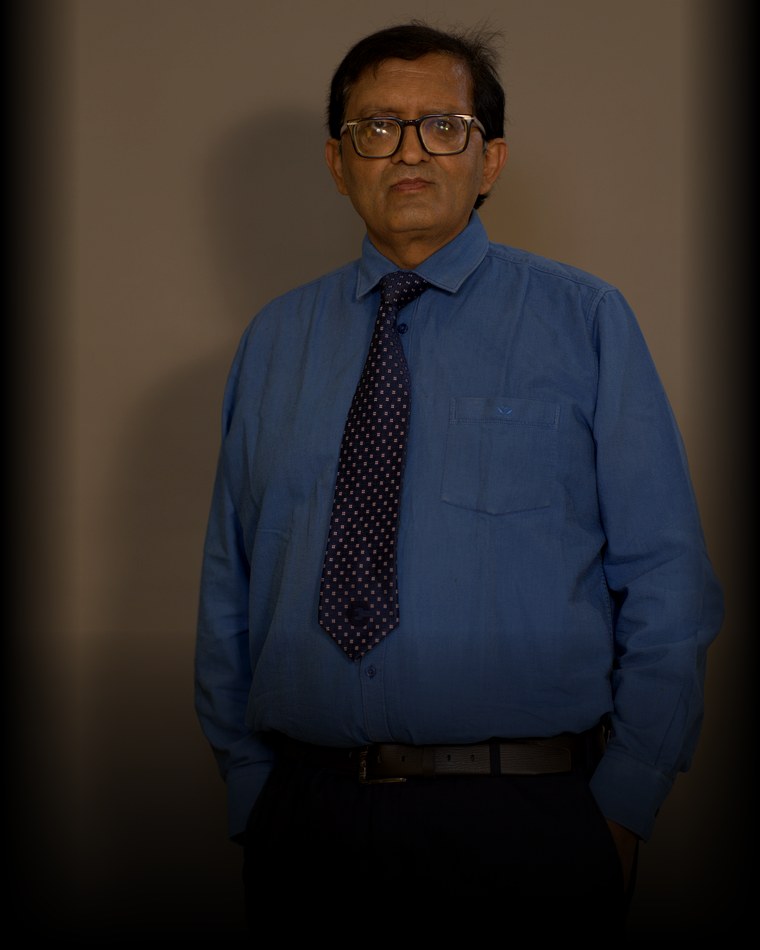
Rajnish Sharma is an IIT Delhi M.Tech engineer and MSME turnaround consultant with 35 years of Indian manufacturing experience. He is the founder of RDS Scalar Revolution — a drug-free self-health education platform — and a practitioner of Vedic astrology and CosmoAstro methodology. Based in Hoshiarpur, Punjab.
Find Your Revenue Bottleneck — Free 30-Min Audit
30-minute diagnostic. Rajnish Sharma (RDS) identifies your primary bottleneck. You get a specific action plan. No deck. No pitch.
IIT Delhi M.Tech · 35 years Indian manufacturing experience
Related articles:
