Export Strategy for Small Manufacturers India: Real Guide
Key Takeaways
- Indian MSMEs can begin exporting within 60–90 days if documentation, pricing, and buyer outreach are done in the right sequence
- Southeast Asia, the Middle East, and Africa offer faster first-order opportunities than the US or Europe for most Indian manufacturing MSMEs
- The single biggest reason small manufacturers fail at exporting is not quality or price — it is internal capacity and operational readiness
- Government schemes like MEIS successors, RoDTEP, ECGC credit insurance, and TReDS can significantly reduce export risk and improve cash flow
- Getting your first export order is a sales problem, not a compliance problem — most founders get this backwards
- Before you export, fix the bottleneck inside your factory first — exporting scales problems, not just revenue
How Can a Small Manufacturer in India Start Exporting for the First Time?
Start with readiness, not registration. Most founders reverse this. They get an IEC code, open a current account, and then realise their factory cannot deliver consistent quality at volume. Export buyers — especially institutional buyers — will test you with a small order, and if you fail that test, you will not get a second chance.
The correct sequence is: stabilise domestic operations first, then cost your product for export (ex-works, FOB, CIF — learn these terms before your first inquiry), then register, then find buyers. This is not a slow approach. Founders who follow this sequence close their first real export order in 60–90 days. Founders who skip to registration spend 18 months chasing leads that go nowhere.
In my work with Indian MSME manufacturers — across auto components, fabrication, agro-processing, and industrial goods — the pattern is consistent. The units that successfully export are not the ones with the best product. They are the ones with predictable delivery and a factory that does not collapse under an unexpected 40% volume increase. If you are unsure whether your operation is export-ready, start with an honest assessment of your current on-time delivery rate. If it is below 85%, fix that first. (Source: FIEO — Federation of Indian Export Organisations)
Which International Markets Offer the Best Opportunity for Indian MSME Manufacturers?
For first-time MSME exporters, the answer is almost never the US or EU — at least not as your first market. These markets have long payment cycles, complex compliance requirements (CE marking, FDA registration, etc.), and buyers who expect 2–3 years of export track record before placing significant orders.
Southeast Asia — particularly Vietnam, Indonesia, and the Philippines — offers faster entry for industrial components, packaging materials, and processed goods. The Middle East, especially UAE and Saudi Arabia, is an outstanding starting market for engineering goods, chemicals, and building materials. Indian manufacturers have natural advantages there: proximity, existing trade relationships, and a large Indian diaspora in procurement and sourcing roles. Africa — Kenya, Tanzania, Nigeria — is increasingly viable for agro-processing and consumer goods. (Source: Ministry of Commerce and Industry, India — Annual Export Statistics)
The best market for your product is the one where your landed cost is competitive and where a real buyer shortage exists. This is a research task, not a guessing exercise. Use DGFT trade data, ITC-HS code-level export data from the Commerce Ministry portal, and sector-specific FIEO reports to identify where Indian competitors are already selling — then assess whether you can undercut or differentiate.
One framework I use with clients: identify three target markets, map two or three active importers in each, and make direct outreach before spending a rupee on trade fair registration. Most small manufacturers have never sent a single cold email to a foreign buyer. That alone separates the ones who export from the ones who talk about it.
What Documents Does an Indian MSME Need to Begin Exporting?
The core documentation is shorter than most founders assume. You need an Import Export Code (IEC) from DGFT — this is a one-time registration, currently available online. You need a GST registration (already mandatory for most MSMEs). You need a current account with an authorised dealer bank for foreign currency transactions. That is the minimum. (Source: DGFT — Directorate General of Foreign Trade, Government of India)
Beyond that, transaction-specific documents include: Commercial Invoice, Packing List, Bill of Lading or Airway Bill, Certificate of Origin (from FIEO or your local Chamber of Commerce), and Shipping Bill filed with Customs. For certain products — chemicals, food items, pharmaceuticals — additional certifications apply. FSSAI approval for food exports, for example, is non-negotiable.
Do not get paralysed by documentation. The paperwork for a first shipment is manageable. A good Custom House Agent (CHA) handles most of it. The mistake is spending three months learning documentation theory before approaching a single buyer. Get your IEC, get a CHA on retainer, and start the sales process simultaneously.
How Do Small Indian Manufacturers Get Their First Export Orders?
This is a sales problem. Treat it like one.
The fastest path to a first export order is direct outreach to importers and distributors in your target market — not trade fairs, not portals, not waiting for an inquiry. Platforms like Alibaba, IndiaMART Global, and Tradeindia have their place, but they are competitive and slow. Direct outreach — finding the right importer on LinkedIn, through sector associations, or via embassy trade desks — closes faster. (Source: FIEO Export Readiness Index 2023)
Second fastest: leverage your existing domestic customers. If you supply to a large Indian company that has international operations or procurement offices abroad, ask them directly. Many MSME manufacturers have an export opportunity sitting inside their current customer list that they have never pursued.
Third: engage your sector's Export Promotion Council (EPC). India has 26 EPCs covering sectors from engineering to leather to chemicals. They run buyer-seller meets, provide trade intelligence, and can make direct introductions. Most MSME founders have never contacted their EPC. This is a free resource they are leaving on the table.
The underlying principle here connects to what I write about in B2B Sales Conversion for Manufacturers — export is a B2B sales process with a longer cycle and different buyer psychology. Apply sales rigour, not just logistics readiness.
Why Do Most Small Indian Manufacturers Fail at Exporting — and How to Avoid It?
The most common failure mode is not quality rejection or payment default. It is internal capacity collapse. A manufacturer gets an export order for 3x their normal monthly volume, accepts it because the opportunity seems too good to refuse, and then fails to deliver on time. The relationship ends before it begins.
I have seen this across dozens of MSME turnaround engagements. A fabrication unit in Punjab took an export order from a UAE buyer, could not source raw material fast enough, shipped two weeks late, and lost the account. The product quality was fine. The operational readiness was not. This is why I say: exporting does not create problems — it reveals the problems already inside your factory.
The second failure mode is wrong pricing. Founders calculate their domestic selling price, add 10–15%, and call it an export price. This ignores duty drawback, freight costs, longer receivables cycles, and currency risk. Export pricing needs to be built from the ground up — ex-works cost plus margin, then layered with logistics, insurance, and payment terms. If your export price is not calculated correctly, you can win orders and lose money simultaneously.
The fix: run a proper internal audit before you pursue export markets. If you want a structured way to identify where your factory is losing capacity and margin, the Profit Leak Detector is a good starting point. Fix the internal bottleneck first. Then export.
Which Government Schemes and Incentives Can Indian MSME Exporters Leverage?
The RoDTEP scheme (Remission of Duties and Taxes on Exported Products) replaced the older MEIS and reimburses embedded taxes that exporters cannot otherwise claim. Rates vary by product and HS code — check the CBIC notification for your specific product. This directly improves export profitability. (Source: Central Board of Indirect Taxes and Customs, Government of India)
ECGC (Export Credit Guarantee Corporation of India) provides credit insurance against buyer default and political risk. For small manufacturers extending credit to foreign buyers, this is not optional — it is essential risk management. Premiums are reasonable and the coverage has saved many MSMEs from catastrophic bad debt on export receivables.
SIDBI and EXIM Bank both offer export-specific credit lines at competitive rates. The Interest Equalisation Scheme provides a 3–5% interest subvention on pre and post-shipment credit for MSME exporters — reducing your effective cost of export finance significantly. (Source: Ministry of Finance, India)
Finally, the Market Access Initiative (MAI) scheme funds participation in international trade fairs, reverse buyer visits, and product testing for compliance with foreign standards. If you are planning to exhibit at Hannover Messe or the Canton Fair, apply for MAI funding through your EPC before booking. Most founders pay full cost when 50% could be covered.
Next Steps
If you are a manufacturing founder in India who is serious about exports — not just curious about them — the conversation worth having is about what is actually blocking you. In most cases I have worked with, it is not the foreign buyer, the documentation, or even the competition. It is one specific internal constraint that the founder has learned to work around rather than solve. That is the conversation I have in a 30-minute Revenue Audit. No pitch, no slides — just a direct diagnosis. WhatsApp me at +91 70879 43430 or visit rajnishrds.com to book your session.
For more information, contact Rajnish Sharma — rajnish@rajnishrds.com | +91 70879 43430
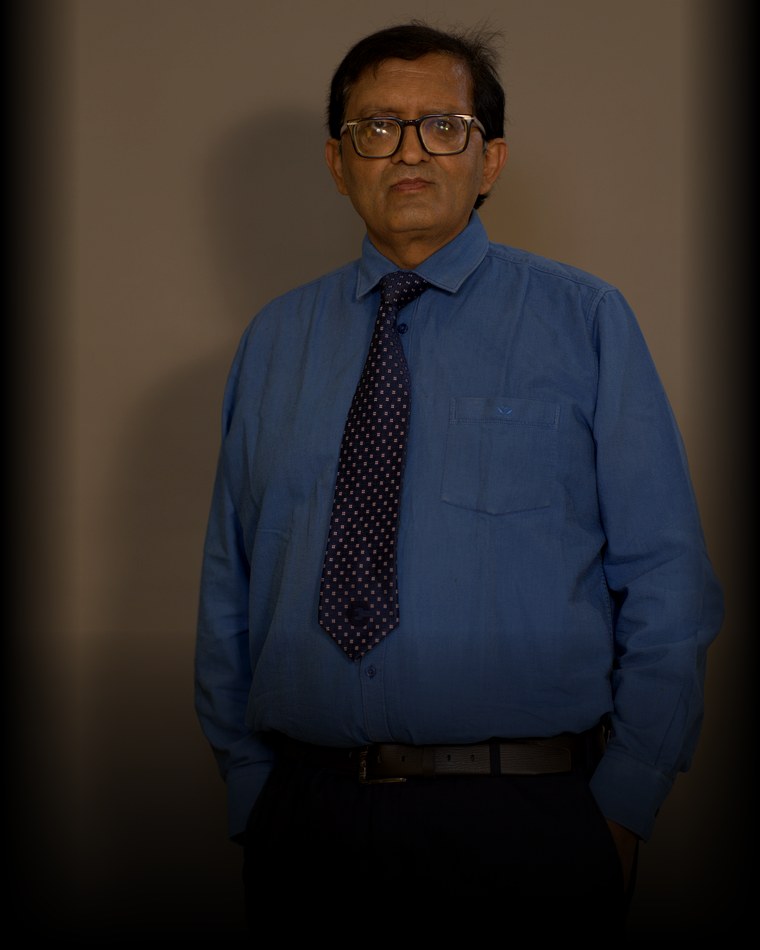
Rajnish Sharma is an IIT Delhi M.Tech engineer and MSME turnaround consultant with 35 years of Indian manufacturing experience. He is the founder of RDS Scalar Revolution — a drug-free self-health education platform — and a practitioner of Vedic astrology and CosmoAstro methodology. Based in Hoshiarpur, Punjab.
Find Your Revenue Bottleneck — Free 30-Min Audit
30-minute diagnostic. Rajnish Sharma (RDS) identifies your primary bottleneck. You get a specific action plan. No deck. No pitch.
IIT Delhi M.Tech · 35 years Indian manufacturing experience
Related articles:
