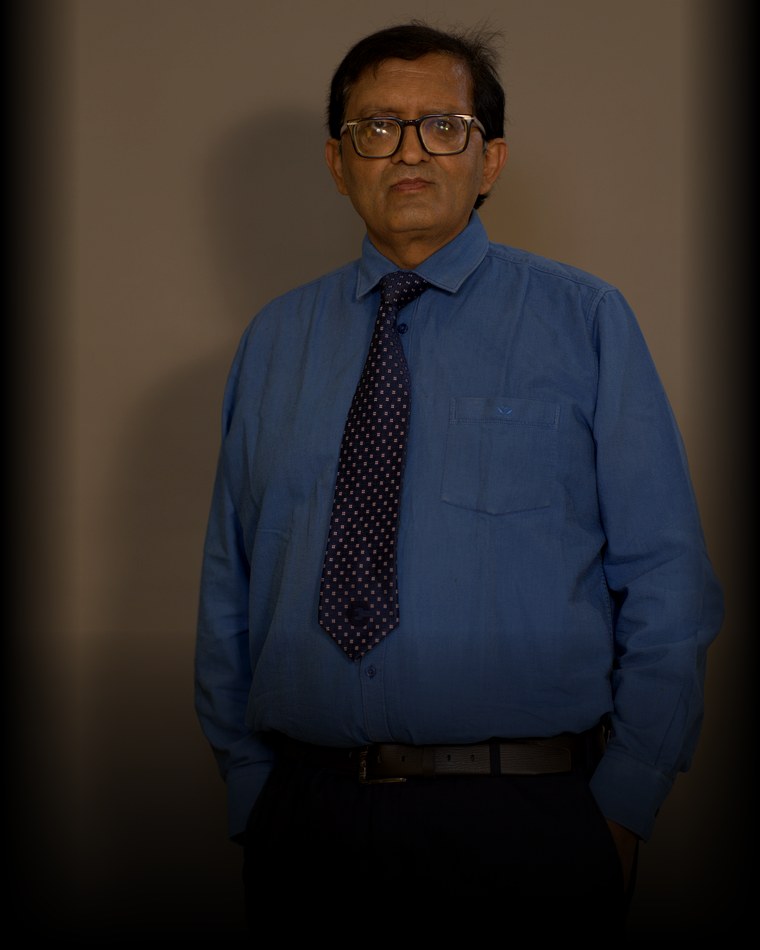
Ravi Dubey's Plea Exposes Bollywood's Real Problem With Our Dharma
When a filmmaker tells you to "wait with faith," he's asking you to suspend something far more dangerous than disbelief — he's asking you to suspend your own civilisational memory. Actor-turned-producer Ravi Dubey's recent appeal to impatient audiences waiting for the Ramayana remake starring Ranbir Kapoor, Sai Pallavi, and Yash is not about movie timelines. It's about something much larger: why does a 7,000-year-old Sanskrit epic need Mumbai's current A-list to make it relevant to Indian youth in 2024?
What Actually Happened
Ravi Dubey, known for his role in Sony TV's "Lakshman," has been working on what industry insiders are calling "one of the most ambitious Indian mythological projects ever attempted." The casting of Ranbir Kapoor, a Bollywood heavyweight, along with Tamil superstar Yash and Telugu actress Sai Pallavi, created immediate frenzy. But Dubey's recent statement — essentially asking audiences to exercise patience and faith — suggests the production timeline has stretched beyond expected release windows. He framed this appeal not as a commercial delay, but as a spiritual one: trust the process, trust the dharma.
The broader context: Bollywood has made multiple attempts at mythological storytelling over the past decade, from Sanjay Leela Bhansali's "Padmaavat" to streaming platform adaptations of various Puranas. Each casting announcement generates debate about whether established film actors can authentically embody sacred characters. The Ramayana remake is positioned as the most resource-intensive of these attempts, with budgets rumored in the 200+ crore range.
What This Means for India
Here lies the critical pattern most Indian media misses: we have outsourced the transmission of our own dharmic knowledge to the entertainment industry. The Ramayana is not a Netflix miniseries waiting for perfect casting. It is a manual for statecraft, sacrifice, and the non-negotiable cost of ethical governance. It encoded military strategy that modern game theorists are only now validating mathematically. It contains a complete theory of masculinity, femininity, loyalty, and power distribution that predates modern organizational theory by 2,500 years.
Yet we wait for a Ranbir Kapoor to make it "relatable." This is not a problem of production delays. This is a civilisational malaise. The real question Ravi Dubey should be answering is not "when will the film release?" but "why does our youth need a Bollywood franchise to understand their own inheritance?" If Vedic knowledge requires star power to transmit, have we already lost the thread?
India's education system has systematically erased the Ramayana from serious intellectual discourse. It teaches Shakespeare's tragedies as examples of human conflict, but treats the Mahabharata as mythology, not as encoded governance and strategic philosophy. A child in Delhi learns about the French Revolution's dates and participants, but not about Rama's decision to exile himself — arguably the most sophisticated exploration of duty versus personal happiness ever written.
The Deeper Story Nobody is Telling
Bollywood's Ramayana remake is not a cultural reclamation. It is the final stage of cultural colonization — we now validate our own traditions only when they are packaged, starcast, and monetized in the language of global entertainment metrics. Valmiki did not write the Ramayana for box office returns. He wrote it as a philosophical manual, transmitted through oral recitation, temple ritual, and guru-shishya paramparа.
The casting of established actors is not incidental. It's structural. It says: our story has no inherent power. We must import foreign legitimacy — the legitimacy of film stars, box office collections, international distribution deals — to make ancient wisdom palatable to Indian audiences. This is the final victory of cultural displacement. We have convinced ourselves that Bollywood is the new temple, and star power is the new priesthood.
The Vedic Pattern
Valmiki wrote: "Dharmo rakshati rakshitah" — dharma protects those who protect dharma. Today's remake asks a different question: protect dharma, or protect the film industry's commercial interests? The Vedic transmission was never dependent on individual charisma. A guru teaches a student not because the guru is famous, but because the student is ready. The readiness comes through discipline, not entertainment value. We have inverted this principle entirely.
Follow BHARAT DECODED on Telegram: t.me/DecodedByRDS — Rajnish Sharma (RDS)