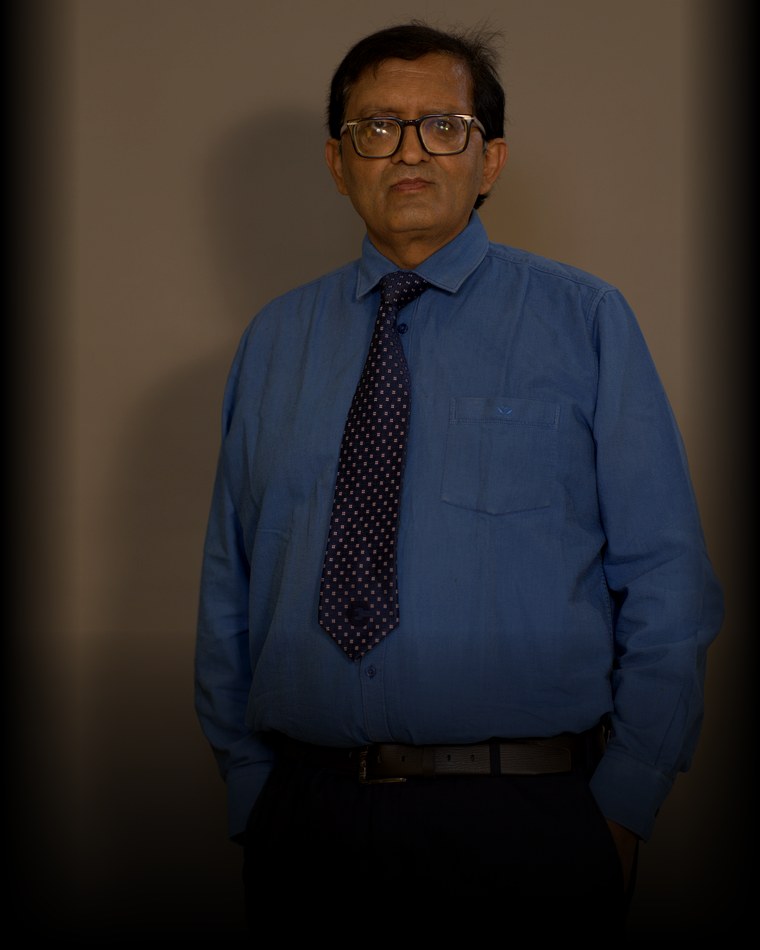
PR Krishnamoorthy Built Factories Like a Rishi Built Ashrams — And Corporate India Never Forgave Him
The man who asked "Who does this factory serve?" did not fit the template of post-1991 India.
What Actually Happened
PR Krishnamoorthy was not a household name. He was a board member at Lucent Technologies India, a director at Biocon, and a quiet architect of something that Silicon Valley would later patent and call "stakeholder capitalism." In an era when the Sensex was climbing and founder worship was beginning, Krishnamoorthy walked into boardrooms and asked uncomfortable questions.
The standard playbook — maximize shareholder value, minimize cost, exit at the right multiple — did not excite him. Instead, he asked: What happens to the worker's family when automation removes his job? What happens to the village when the factory closes? What happens to the soil, the groundwater, the air? These were not questions that made you popular with VCs or private equity funds. They made you look like you did not understand capitalism.
What This Means for India
We are living through the consequences of ignoring exactly what Krishnamoorthy was asking. Today's startup founder takes venture capital, builds a product, and dreams of the exit — the IPO, the acquisition, the payoff. The factory model of Krishnamoorthy's generation asked a different question: What does this enterprise owe to the ecosystem it sits within?
This is not poetry. This is pattern reading. Look at the data: Indian manufacturing has collapsed from 17 percent of GDP in 2008 to under 13 percent today. Why? Because factories were built as extraction machines, not as institutions. Once the profit could be extracted elsewhere — Bangladesh, Vietnam, a financial product — they were abandoned. The communities that depended on them were left with hollow structures and no instructions for what to do next.
Krishnamoorthy understood something that the MBA curriculum does not teach: A factory is not a ATM. It is a social organism. It creates jobs, yes, but also dignity, skill transfer, community anchoring, and local economic resilience. When you design it only for profit, you design it to fail the moment profit moves elsewhere.
The Deeper Story Nobody is Telling
Here is what kills me about Krishnamoorthy's life: He was operating from a Vedic business model in a post-colonial economy that was desperately trying to prove it could be American. The boards he sat on did not want his questions. They wanted his silence and his credentials. He gave them his conscience instead.
That choice — to remain inconvenient — is what separates the truly influential people from the merely successful ones. He will not have a Wikipedia page. His name will not trend on Twitter. But the principle he lived by — that business and dharma are inseparable — that principle is beginning to haunt the conscience of global capital. They now call it ESG. They now call it impact investing. They now call it stakeholder value. In India, two thousand years ago, we simply called it riti.
The Vedic Pattern
Bhagavad Gita 3.25 states: "Yathaiva sadhus tathaidam sarvam api vartate. Loko yam anuvartate tatha te api vartante naraah." Translated: As the wise act, so do others follow. The world follows the standard set by great men. Krishnamoorthy lived this shloka. He did not separate the factory floor from the ashram. He understood that profit without purpose is not wealth — it is theft from the future. A rishi built an ashram to serve dharma. Krishnamoorthy built factories the same way.
The startup ecosystem will ignore this lesson for another decade. And then they will reinvent it, rename it, and sell it as innovation. Meanwhile, the villages will remember him long after the exits are forgotten.
Follow BHARAT DECODED on Telegram: t.me/DecodedByRDS — Rajnish Sharma (RDS)