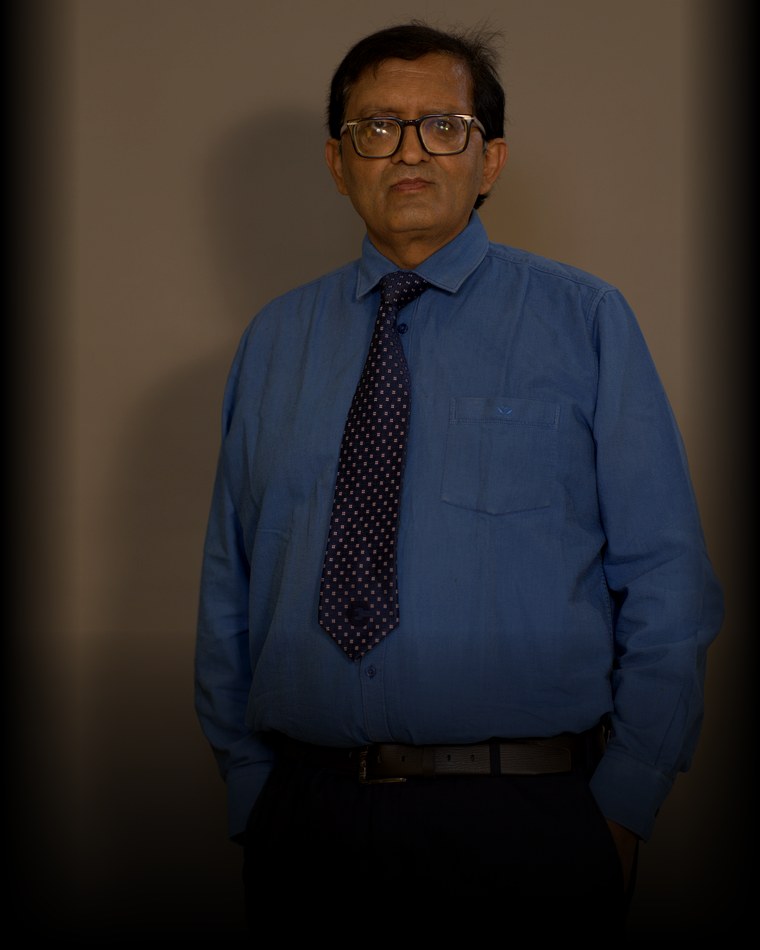
The New Army Chief Just Handed Your Factory a ₹50,000 Crore Opportunity — If You're Ready to Take It
General Dhiraj Seth's appointment as India's new Army Chief isn't about uniforms or parades. It's about dismantling 70 years of India's defence import dependency, and the ripple effect is about to reshape which MSMEs survive the next decade and which become irrelevant.
What Actually Happened
On November 1st, 2024, General Dhiraj Seth took over as Chief of Defence Staff with a singular mandate wrapped in the word "VIJAY" — a doctrine built on four pillars, with Atmanirbharta (self-reliance) as the non-negotiable foundation. This isn't political rhetoric. This is operational reality. The Indian Army, which currently imports approximately 60-65% of its defence spares, components, and sub-systems from foreign OEMs — primarily the US, Israel, France, and Russia — has been given a direct order: SOURCE LOCALLY OR DON'T SOURCE AT ALL.
What does this mean in rupees? India's defence procurement budget sits around ₹1.6 lakh crore annually. If we're talking about component-level and sub-system localization, we're looking at a addressable market of ₹50,000+ crore that will shift from foreign suppliers to Indian manufacturers over the next 5-7 years. The sectors getting hit first are metal stampings for ammunition production, precision-turned components for missile systems, electronic harnesses and PCBs for avionics, and armour-grade castings from small foundries. The army isn't asking nicely. It's restructuring contracts.
What This Means for India
This is the biggest supply chain reformation India has seen since the 1991 liberalization. But here's where most business analysts get it wrong — they think this is about HAL and Hindustan Aeronautics becoming bigger. Wrong. This is about 5,000-10,000 MSMEs becoming HAL's suppliers overnight.
The Indian defence manufacturing ecosystem has a structural problem: there's HAL, BEL, Mazagon Dock at the top. Below them, there's almost nothing. A few Tier-1 suppliers. Then an immediate cliff. When foreign OEMs supplied 60% of components, nobody cared. Now they have to. The Army Chief's VIJAY doctrine creates a forced verticalisation. Suddenly, a precision engineering shop in Bangalore that makes automotive components can pivot to making missile guidance components. A metal foundry in Gujarat that casts pump parts can now cast armour-grade housings. A PCB manufacturer in Pune can now make military-grade electronic harnesses.
The money isn't trickling down from government budgets. It's being pulled up from the ground by necessity. Defence PSUs need suppliers. They have no choice but to find them locally, de-risk them, certify them, and lock them into long-term contracts. This is Atmanirbharta with teeth.
The Deeper Story Nobody is Telling
Here's what the defence ministry won't say in a press release: importing foreign components is dead, but so is the old MSME model of competing on price alone. The Army won't accept "cheap." It will accept "certified." ISO 9001 isn't enough anymore. You need AS9100 (aerospace and defence standard). You need traceability. You need repeatability. You need to prove that your 50th unit is identical to your 1st unit, and your 5,000th unit. This kills the jugaad factory. It kills the shop that operates on handshake deals and verbal specs.
What this also kills is the entire consulting ecosystem that was built on "we have relationships with foreign suppliers and we can get you the best price on imports." That business model has a five-year expiration date. Smart consultants are already pivoting to "we certify MSMEs for defence supply."
What MSME Founders Must Do Now
First: Register with the Defence Procurement Panel (DDP) immediately. This isn't optional. The DDP is essentially the central repository where defence PSUs and the military go to find certified suppliers. Being on this list doesn't guarantee orders, but not being on it guarantees you're invisible.
Second: Get certified. ISO 9001 first, then AS9100 within 12 months. Yes, it costs money. ₹8-15 lakhs for most MSMEs. Yes, it takes time. But it's the entry ticket. Without it, you're not even in the game. PSUs won't even look at your quotation.
Third: Find your anchor — a defence PSU integrator like HAL, BEL, or Mazagon Dock. Don't go direct to the Army. That won't work. Go to the suppliers who supply to them. Pitch your capability. Show your certifications. Offer a pilot order. Build the relationship. One defence PSU client with a repeat order is worth 20 commercial clients combined.
Follow BHARAT DECODED on Telegram: t.me/DecodedByRDS — Rajnish Sharma (RDS)