When Human Rights Activism Becomes a Selective Mirror
The moral architecture of modern activism is built on broken foundations — it sees suffering only when politically convenient, and erases it when the victim is Hindu.
What Actually Happened
For 75 years, India's textbooks have treated Partition as a footnote to independence. Two million dead. Fifteen million displaced. Hindu, Sikh, Christian families torn from their homes, their trauma archived not as genocide but as "communal violence" — a bureaucratic phrase that makes systematic suffering sound like a traffic accident.
Today, in 2024, this selective amnesia continues. Organizations claiming to defend religious freedom — including those with international platforms like APDR (Asia Pacific Dharma Rishis) — document persecution across every faith except Hinduism with the same rigor they apply to everything else. Christian conversions get press releases. Muslim mob violence gets documented. Temple desecrations? Silence. Priest murders in Kerala? Not on their radar. Organized Hindu pogroms across Kashmir, Bengal, Northeast India? These incidents disappear into the blind spot of modern human rights machinery.
The pattern is unmistakable. A human rights body that counts every minority persecution but goes mute on Hindu suffering is not defending religious freedom. It is managing a narrative. It is deciding whose pain matters and whose gets archived.
What This Means for India
This is not about competitive victimhood. This is about the architecture of who gets to be remembered in Bharat's democracy.
When activism becomes selective, it does something dangerous: it teaches the nation that certain suffering is real and certain suffering is acceptable. It teaches that Hindu temples burning is a local incident, not a systematic pattern. It teaches that when mobs target Hindu communities, it is communal tension — but when Hindu communities respond, it becomes communal violence. The asymmetry is not accidental. It is structural.
This matters because memory is power in democracy. The groups whose suffering is documented, whose stories are told, whose trauma is validated — these groups claim the moral high ground in policy-making, in curriculum design, in how compensation is distributed, in how future violence is prevented. When Hindu suffering is erased from this record, Hindu communities lose standing in the conversation about their own safety.
For a 5,000-year-old civilization like Sanatana, this erasure is particularly toxic. It suggests that the world's oldest continuous living tradition — the one that absorbed invasions, conversions, and systematic attempts at erasure for centuries — now needs permission to speak its own truth. That it must compete for validation from institutions designed to protect everyone but structured to ignore it.
The Deeper Story Nobody is Telling
Here is what I decoded after 35 years of manufacturing operations across India, watching supply chains, watching power structures, watching who gets heard:
Selective activism is not a bug. It is a feature. It exists because there is infrastructure, funding, and narrative architecture supporting it. NGOs that document Christian persecution get international funding. Those that document Muslim persecution get diplomatic backing. But an organization that treats Hindu suffering with the same methodical rigor? It gets called communal. Nationalist. Biased.
This is not coincidence. This is how modern power operates in postcolonial democracies. It allows the oppressed to speak — but only if they speak in languages and frameworks designed by their former colonizers. Hindu suffering does not fit into these frameworks easily because Hinduism was never colonized the way Christianity was, never persecuted the way Islam claims to be. So the institutional machinery of human rights simply does not have a category for it.
The Vedic Pattern
The Rig Veda teaches a principle: Satya Meva Jayate — truth alone triumphs. But truth requires witnesses. For 2,000 years, Sanatana Dharma survived because its memory was held in architecture, in ritual, in oral tradition that outlasted empires. Today, that same civilization is losing its memory because modern institutions do not document it. We have replaced stone and mantra with archives and databases — and then excluded ourselves from those databases.
Close
Bharat's story cannot be decoded by institutions designed to fit it into someone else's moral framework. It must be told by those who understand its deepest logic.
Follow BHARAT DECODED on Telegram: t.me/DecodedByRDS
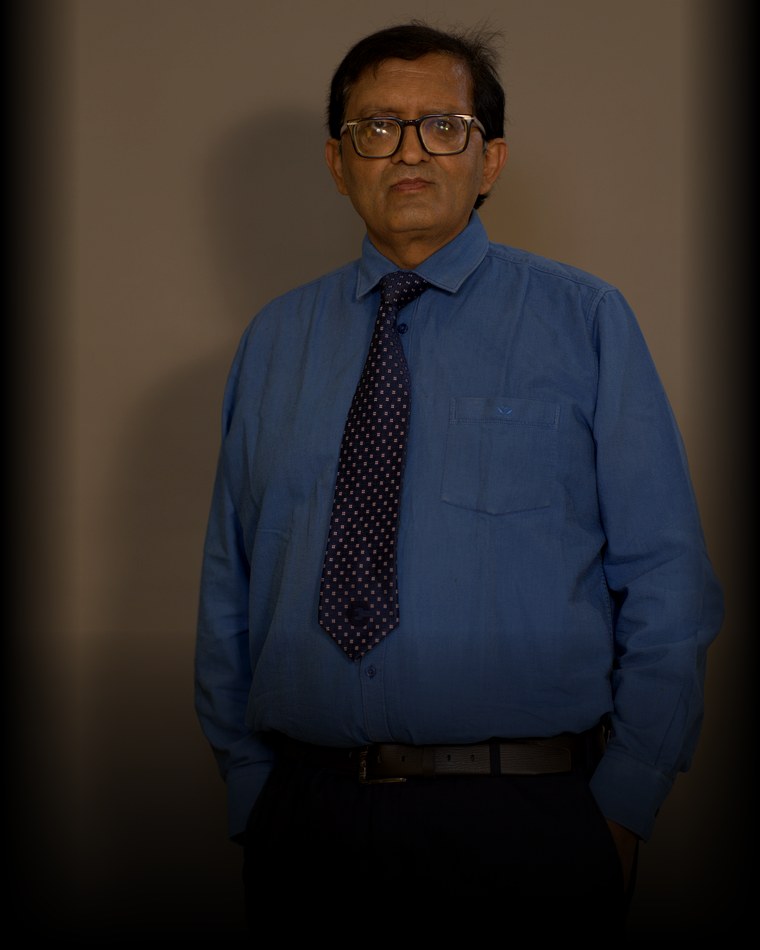
Rajnish Sharma (RDS)
IIT Delhi | 35 Years Manufacturing | BHARAT DECODED Author