Why Is My Manufacturing Business Not Making Profit India
Key Takeaways
- Most Indian manufacturing MSMEs are not unprofitable because of bad products — they are unprofitable because of one hidden operational bottleneck that chokes cash flow and margin simultaneously
- Revenue ceiling signs are predictable and measurable — if you know what to look for, you can diagnose the problem within a week
- Raw material cost inflation, customer concentration risk, and underpowered sales pipelines are three of the most common profit killers in Indian manufacturing today
- Generic MBA frameworks do not work for a ₹25 Cr factory in Punjab or Maharashtra — the fix must be India-specific, operations-first
- Most MSME founders who engage with a structured bottleneck audit find that one single constraint is responsible for 60–80% of their revenue stagnation
- Fixing that one constraint — not ten things simultaneously — is what drives ₹2–8 Cr in recoverable annual revenue within 90 days
What Are 5 Signs Your Manufacturing Revenue Has Hit a Ceiling?
1. Your topline grew last year but net margin shrank.
This is the first and most telling signal. Revenue went up by ₹2–3 Cr. But profit either stayed flat or dropped. That gap — between revenue growth and margin growth — is where the bottleneck lives. It usually means your cost structure is scaling faster than your revenue. In Indian manufacturing, this is frequently tied to uncontrolled overhead creep, subcontractor dependency, or rework costs that never show up cleanly on the P&L. (Source: MSME Ministry of India, Annual Report 2023–24)
2. You are quoting more but winning less.
Your sales team is sending more proposals. Your quotation volume is up. But conversion rate is falling. This is not a pricing problem in most cases — it is a positioning and credibility problem. Buyers at ₹50 Cr+ companies in India do not just buy on price. They buy on reliability, lead time certainty, and past performance. If your conversion is dropping, your pipeline has a leak, not a shortage of leads. I have seen this pattern in auto-component suppliers in Ludhiana and fabrication units in Rajkot — the issue was never the quote, it was the follow-up system and the customer's confidence in delivery. (Source: CII MSME Competitiveness Report, 2022)
3. Your top 2–3 customers account for more than 60% of revenue.
Customer concentration is a silent profit killer. When one buyer represents ₹8 Cr of your ₹12 Cr annual revenue, you lose all pricing power. You accept their payment terms — 90 days, sometimes 120. You absorb their design changes without revision charges. You hold buffer stock at your cost. This is not a relationship — it is a hostage situation. And it directly compresses your working capital, which compresses your ability to invest in growth. (Source: RBI Report on MSME Financing Constraints, 2023)
4. Machine utilisation is below 65% but your team says capacity is full.
This contradiction appears in almost every factory I walk into. The shop floor manager says we are running at full capacity. The data says machine utilisation is 58%. Both are telling the truth — from where they sit. The gap is usually scheduling inefficiency, unplanned downtime, or a mismatch between machine capability and the job mix. You are not out of capacity. You are out of organised capacity. This distinction matters enormously when you are trying to grow revenue without adding capital expenditure. (Source: National Productivity Council, Manufacturing Productivity Report 2022)
5. You have not raised prices in 18–24 months despite input cost increases.
Raw material prices for steel, aluminium, copper, and polymers have seen significant volatility since 2021. (Source: Ministry of Steel, India, Price Trend Data 2021–2024) If you have not passed even a portion of that increase to your customers, you are absorbing it in margin. Most MSME founders avoid price conversations because they fear losing the order. The irony is that most of their customers expect annual price revisions — they just do not offer them voluntarily. Silence on pricing is not safety. It is slow margin erosion.
Why Do Indian Manufacturing MSMEs Struggle With Profit More Than Revenue?
Revenue is easier to grow than profit in manufacturing. You can win a large order by cutting price. You can hit a topline number by working your machines harder. But profit requires discipline across procurement, production scheduling, workforce productivity, and customer terms — simultaneously.
In India, the specific challenge is compounded by a few structural realities. GST compliance costs, power tariff variability across states, and skilled labour attrition in Tier-2 and Tier-3 cities all erode margin in ways that do not appear on a standard cost sheet. (Source: FICCI Manufacturing Survey, 2023) A founder in Hoshiarpur or Coimbatore faces cost pressures that a textbook written in Delhi or a framework designed for a multinational simply does not account for.
The other issue is decision overload. Most MSME founders are operationally embedded. They are solving 40 problems a day. Nobody is sitting outside the system, looking at which one of those 40 problems is actually the bottleneck — the single constraint that, if removed, frees up the most value. This is exactly what the Scalar Revenue Unlock System is designed to do. Not fix everything. Fix the one thing that unlocks everything else.
In my work across 50+ MSME turnarounds, the bottleneck was in sales process 30% of the time, in production scheduling 25% of the time, and in pricing strategy 20% of the time. The remaining 25% was split across procurement, workforce, and working capital management. The point is — it is always one thing first. And that one thing is identifiable within days, not months.
What Is the Real Cost of Ignoring a Profit Problem in Manufacturing?
Every month you operate without identifying your primary bottleneck, you are leaving real money behind. This is not a motivational statement — it is arithmetic.
If your factory turns over ₹20 Cr annually with a 6% net margin, you are making ₹1.2 Cr profit. An unaddressed bottleneck in your sales-to-production handoff — a common issue — can mean 15–20% of orders are either delayed, discounted to retain the customer, or reworked at your cost. That is ₹3–4 Cr in revenue that is either not arriving or arriving with stripped margin. (Source: McKinsey Global Institute, Productivity in Indian Manufacturing, 2020)
The compounding effect is worse. Poor delivery performance affects your reputation with buyers. Reputation damage means you compete on price next cycle. Price competition means lower margin next year. The spiral is predictable. And it starts with one unresolved operational constraint that the founder has learned to live with because it has always been there.
I have seen this in die-casting units, sheet metal fabricators, food processing plants, and packaging manufacturers across North and West India. The constraint was different each time. But the pattern of avoidance — and the cost of that avoidance — was identical.
If you want to identify where your factory is losing money specifically, the Profit Leak Detector tool on this site gives you a structured starting point. And the deeper read on operational bottlenecks is covered in Why Manufacturing Revenue Stops Growing — 7 Bottlenecks.
Next Steps
You have worked too hard and invested too much to accept thin margins as normal. The profit problem in your manufacturing business is not fate — it is a fixable constraint. The founders I have worked with through the MSME Revenue Engine Programme have added ₹2–8 Cr in annual revenue within 90 days — not by reinventing their business, but by removing the one thing that was blocking it. If that sounds relevant to where you are right now, let us talk. No pitch, no pressure — just a direct conversation about your numbers and what is possible.
For more information, contact Rajnish Sharma — rajnish@rajnishrds.com | +91 70879 43430
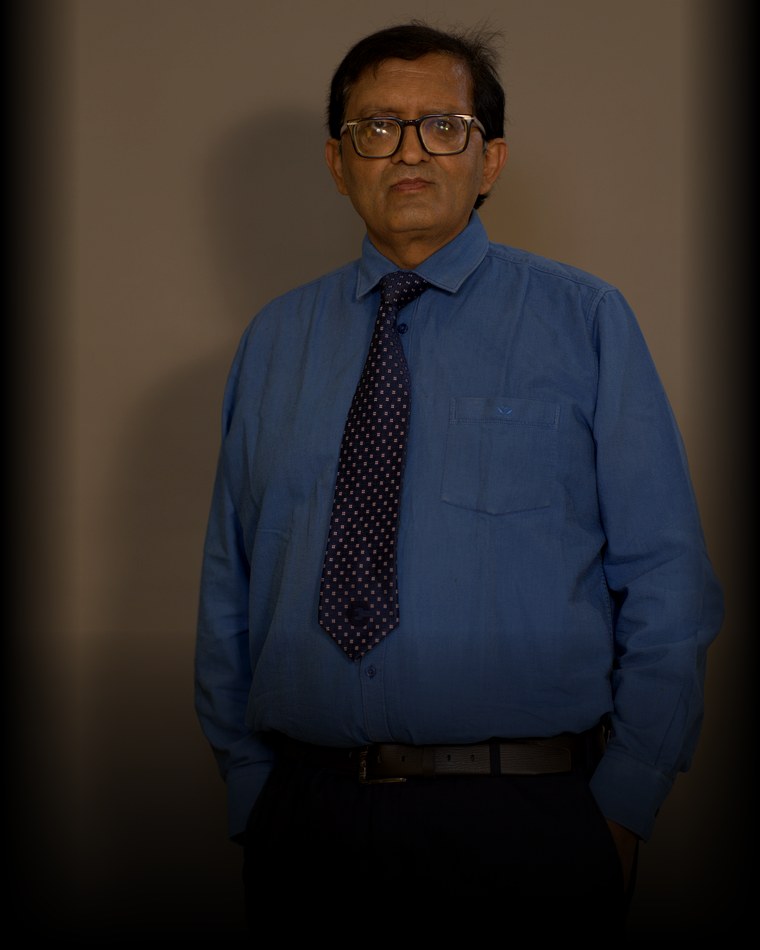
Rajnish Sharma is an IIT Delhi M.Tech engineer and MSME turnaround consultant with 35 years of Indian manufacturing experience. He is the founder of RDS Scalar Revolution — a drug-free self-health education platform — and a practitioner of Vedic astrology and CosmoAstro methodology. Based in Hoshiarpur, Punjab.
Find Your Revenue Bottleneck — Free 30-Min Audit
30-minute diagnostic. Rajnish Sharma (RDS) identifies your primary bottleneck. You get a specific action plan. No deck. No pitch.
IIT Delhi M.Tech · 35 years Indian manufacturing experience
Related articles:
