Punjab's manufacturing sector is different. Ludhiana produces 70% of India's bicycle components and 40% of its auto parts. Jalandhar is the world's second-largest producer of sports goods. Hoshiarpur has a dense network of furniture and light engineering units. If you are running an MSME in Punjab and looking for a consultant who understands the terrain - not just the theory - this article is for you.
What makes Punjab MSME businesses different from the rest of India
Punjab manufacturers face constraints specific to the region:
- Labour availability: Skilled operators in Ludhiana, Jalandhar, and surrounding districts are in short supply. Seasonal migration patterns affect shop floor capacity unpredictably.
- Working capital cycles: Punjab National Bank and UCO Bank MSME lending tends to be conservative. Working capital lines are often undersized relative to order books. Cash conversion cycles stretch 60-90 days on export orders.
- GST compliance load: The transition from Punjab's trader-manufacturer network to GST-compliant invoicing created friction - especially in sub-10 crore units previously operating informally.
- Export corridor access: Punjab manufacturers export via Delhi NCR ports - adding 2-3 days transit and documentation bottlenecks that delay shipments and strain buyer relationships.
- Power costs: Industrial power tariffs in Punjab are among the highest in North India. Energy cost as a percentage of manufacturing cost can hit 15-20% in energy-intensive operations.
A generic MSME consultant from a Delhi or Mumbai firm will not know these constraints. What Punjab manufacturers need is a consultant who has operated in this environment - who knows what a Ludhiana auto-parts factory looks like at 2 AM before a delivery deadline.
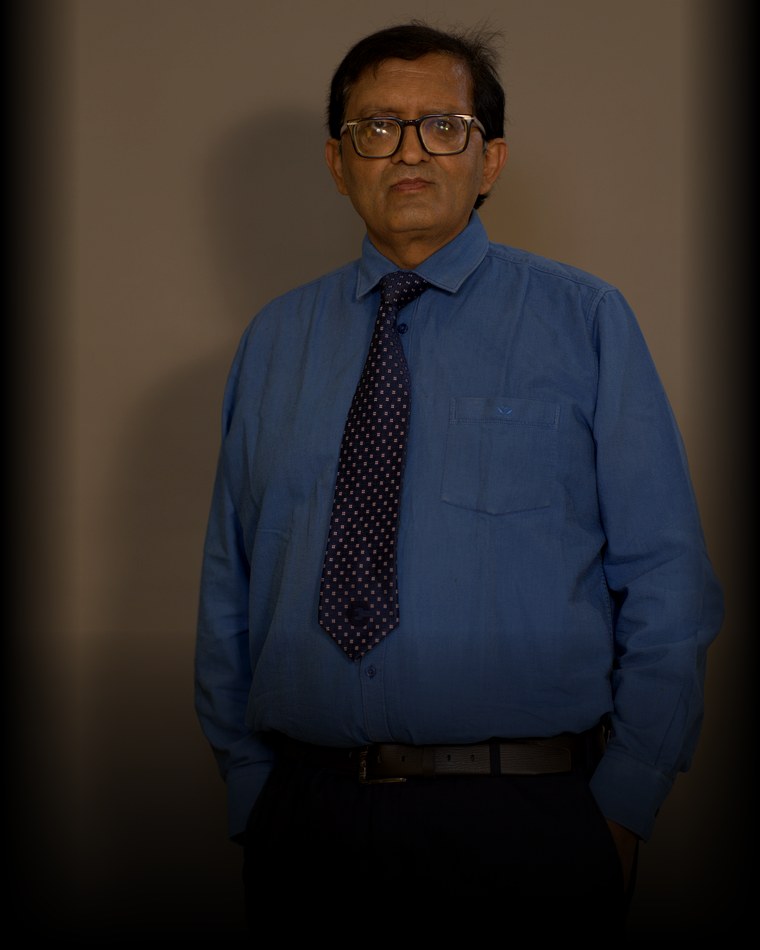
Who is Rajnish Sharma - MSME consultant based in Hoshiarpur, Punjab
Rajnish Sharma (RDS) is a manufacturing turnaround specialist based in Hoshiarpur, Punjab:
- IIT Delhi M.Tech - one of India's most rigorous technical institutions
- 35 years in manufacturing: plant operations, supply chain, B2B sales
- Specialization: revenue bottleneck identification and 90-day revenue growth systems
- Client base: manufacturers 10 to 300 crore across Punjab, Haryana, Himachal Pradesh, and pan-India
- Location: Hoshiarpur, Punjab - available for factory visits across North India
This combination - IIT Delhi technical foundation + 35 years in actual manufacturing + Punjab base - is rare. Most MSME consultants in India are MBA generalists or narrow-domain experts. Rajnish Sharma's diagnostic approach spans operations, cash flow, and commercial strategy simultaneously.
What does an MSME turnaround engagement look like in Punjab
Every engagement starts with a free initial diagnosis call - a structured 45-minute diagnostic covering:
- Current revenue run rate and when growth stopped
- Order delivery metrics - average cycle time, on-time delivery rate
- Cash conversion cycle - inventory days + receivable days minus payable days
- Top 5 customers by revenue and their growth trajectory
- Founder time allocation - percentage in operations versus commercial development
This identifies which of the five bottleneck types is primary: production capacity, quality systems, cash availability, sales pipeline, or management bandwidth. Most founders think their problem is sales. It usually is not.
Cities served across Punjab and North India
- Punjab: Ludhiana, Jalandhar, Hoshiarpur, Amritsar, Patiala, Bathinda, Mohali, Rupnagar
- Haryana: Gurugram, Faridabad, Panipat, Karnal, Ambala, Rohtak, Hisar
- Himachal Pradesh: Baddi, Nalagarh, Una
- Delhi NCR: Okhla, Wazirpur, Kundli, Manesar, Noida
- Pan-India: Video consultation, on-site visits for qualified engagements
Free Bottleneck Audit: Rajnish Sharma offers a no-cost initial diagnosis for manufacturing businesses 10 crore and above. 45-minute call. Identifies your primary revenue bottleneck. No obligation.
How to book an MSME consultation in Punjab
WhatsApp +91 7087943430 or email rajnish@rajnishrds.com with a brief description: what you manufacture, current revenue, and where growth has stalled. Rajnish will schedule the free diagnosis call within 48 hours.
Punjab manufacturing industries — where Rajnish Sharma has deep experience
Ludhiana — Auto Parts and Bicycle Components
Ludhiana produces 70% of India's bicycle components, 40% of its domestic auto parts, and is the hub of North India's light engineering supply chain. Common bottlenecks in Ludhiana manufacturers: quality rejection rates from OEM customers (Bajaj, Hero, TVS), cash flow stretched by 90-day payment cycles from large buyers, and production scheduling failures when multiple product variants run on the same line. Rajnish Sharma has worked with auto parts suppliers in the 15–80 crore range on each of these specific constraints.
Jalandhar — Sports Goods and Allied Manufacturing
Jalandhar is the world's second-largest sports goods manufacturing hub. The primary business challenges are export compliance (EU/US importers increasingly require ISO and compliance certifications), margin compression from low-cost Chinese competition, and the transition from trader-manufacturer to direct export models. Rajnish Sharma's 35 years of B2B commercial experience directly addresses the commercial strategy side of this transition.
Hoshiarpur — Furniture and Light Engineering
Hoshiarpur's manufacturing cluster spans wood-based furniture, light engineering, and agro-processing. The dominant bottleneck pattern in Hoshiarpur MSMEs: working capital constraints that prevent taking large institutional orders (schools, hotels, government), and the inability to scale from artisan production to system-based manufacturing. Rajnish Sharma is based in Hoshiarpur and offers factory visits for qualified engagements in this district.
Amritsar — Food Processing and Textiles
Amritsar is a growing hub for food processing (basmati, wheat, spices) and textile exports. The primary revenue constraint in this sector: buyer concentration risk (3-4 buyers representing 80% of revenue) and the inability to build a direct sales pipeline to new institutional or export buyers. Rajnish Sharma's B2B sales system directly addresses buyer diversification.
The 5 most common mistakes Punjab manufacturers make when revenue stalls
- Hiring more salespeople before fixing the fulfillment system: If your factory cannot deliver on time at current volumes, adding salespeople makes the problem worse. New orders arrive, existing commitments slip, and you lose both. The production constraint must be fixed before you scale sales.
- Taking bank loans to solve cash flow problems: Cash flow problems in manufacturing are almost never a capital shortage. They are a cash conversion cycle problem — you are waiting too long to collect. Bank loans add interest cost to a structural problem, deferring the real fix.
- Blaming the economy or GST for stalled revenue: Every sector has manufacturers growing in the same environment where others are stalling. External factors explain the backdrop — not the specific constraint your business faces. Your competition is growing. Something specific to your operation is the difference.
- Making production investments before identifying the bottleneck: A new machine does not improve throughput if the bottleneck is downstream in quality control or upstream in raw material supply. Capital investments without constraint analysis are the fastest way to add cost without adding revenue.
- Running the business from gut feel without data: Most Punjab MSME owners cannot tell you their order-to-delivery cycle time, their on-time delivery rate, or their cash conversion cycle. Without this data, you are steering blind. The first step in any bottleneck removal is instrumentation — measuring what you currently cannot see.
What the free diagnosis call covers
The initial free call with Rajnish Sharma is structured — not a sales pitch. It covers:
- Revenue timeline: when did growth last accelerate, when did it stall, what changed between those two points?
- Production metrics: capacity utilisation, on-time delivery rate, top quality rejection reasons
- Commercial metrics: active customers, revenue concentration, last new customer acquired and when
- Cash position: current working capital availability, largest outstanding receivable, payment terms with key buyers and suppliers
- Founder time: percentage of your working week in operational firefighting versus commercial development
At the end of this call, you will have a clear view of which bottleneck type is primary in your business — whether or not you choose to engage Rajnish Sharma for the removal phase. This is genuine value, not a tease.
Rajnish Sharma vs generic MSME consultants — what is different
Most MSME consultants in India are one of three types:
- MBA generalists: Know frameworks. Have never run a factory floor. Give recommendations that sound right but are operationally impractical in a 30–100 crore unit without 50-person management teams.
- Narrow specialists: An ISO consultant. A GST advisor. An HR specialist. They solve one piece of the puzzle. They cannot identify whether that piece is actually the primary constraint.
- Large consulting firms (McKinsey, BCG, Deloitte): Designed for 500+ crore enterprises. Engagement fees of 1–5 crore. Delivered by junior analysts with no manufacturing experience. Zero relevance to a 10–100 crore MSME.
Rajnish Sharma's profile is rare: IIT Delhi technical foundation + 35 years in actual plant operations and B2B commercial work + deep familiarity with the Punjab manufacturing environment. He operates with the knowledge depth of a specialist and the systems perspective of a generalist — simultaneously.